2nd AC
A short film I worked on down in Cardiff with, Matt Lewis. The entire shoot was on a coach and it proved to be a difficult shoot due to the tight space.
Link to Mathew Lewis’ IMDb:
https://www.imdb.com/name/nm8009921/?ref_=ttfc_fc_cr15
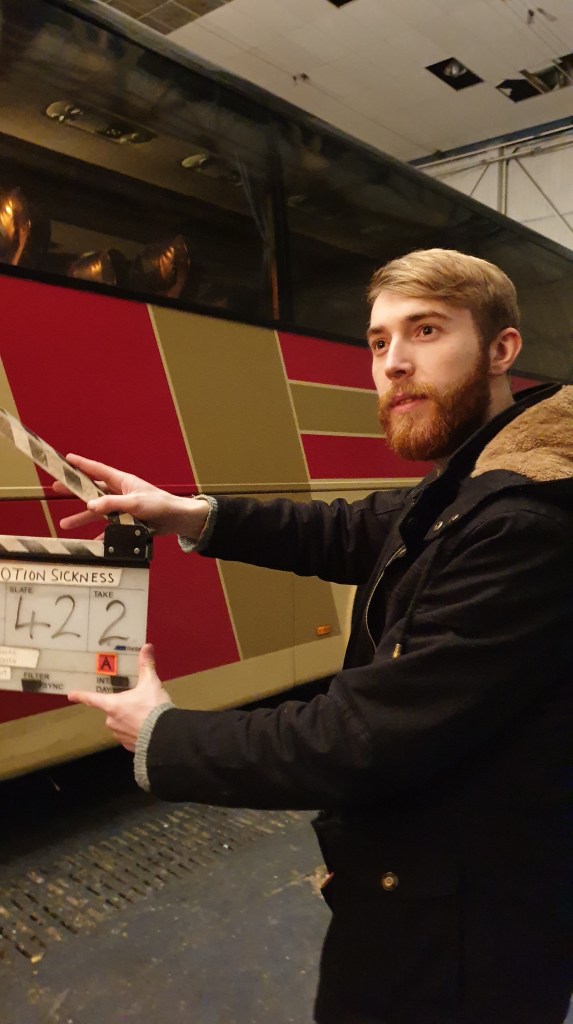
This is my marked up clapperboard for the shoot. The clapper board is used to identify which shot it is for the editor and to sink with sound. In accordance with NOS, National Occupational Standards – I made sure to mark up my board in the discussed location, in order to be out of the way of any other department setting up:
SKSC26
Set up and operate clapperboards.
– 2. prepare and set up clapperboards in agreed locations – (NOS 2019)
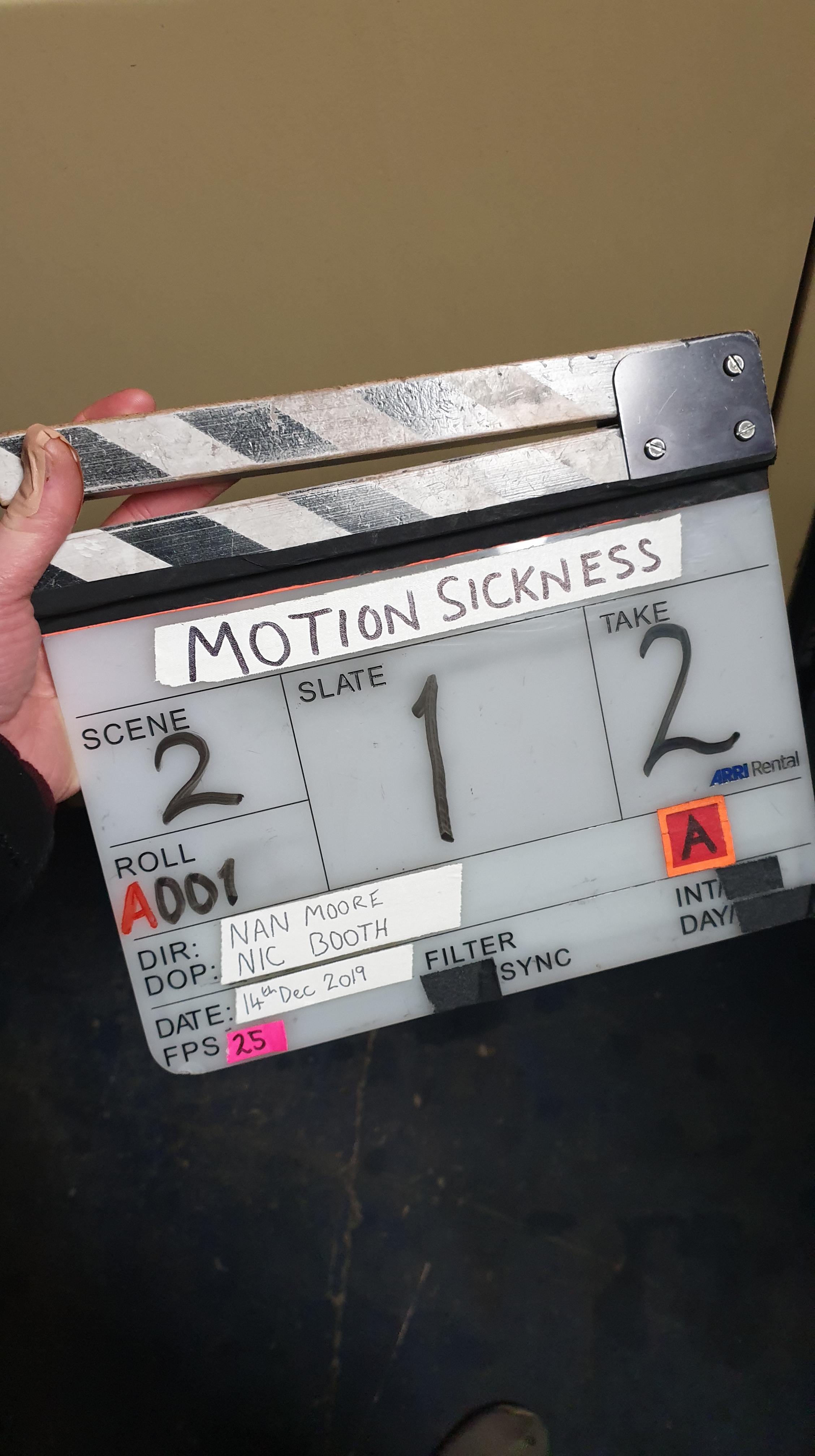
Unfortunately, this is not a good example of how my clapper boards usually look. The white gaffer tape was done the way it was on the title as requested and the names for the director and director of photography are untidy. I would say my numbers are large, fit the boxes and are very clear. Below shows the standard of boards on the “James Bond“:
As you see the standard of this board is much higher with neat and tidy with a professional look. However, being on a big production like “James Bond“, allows for the board to be made customised with title and Director and Director of Photography names printed, whereas lower productions don’t have the budget for such luxury. Regardless of the budget of the film, in future, I will make sure to have the standard of my board as good as I can make it. I will do what my superiors of the specific shoot say, but in future I will fight to not have my clappers boards be of such low standard as my “Motion Sickness” board.
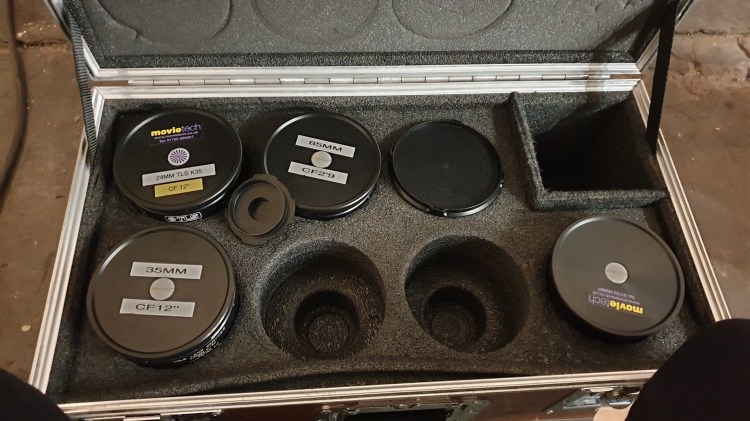
Below shows the lenses we were using for the shoot, TLS – True Lens services – Canon K35. We had a mag-liner designated for the lenses which was kept where all of our camera equipment was kept, that was right next to set:
We were using 4 lenses, 24mm, 35mm, 55mm and 85mm, below shows a table showing all the technical information about the lenses:
I wasn’t able to get a creative reason from the DOP, Nic Booth, as why he chose the TLS Canon K35’s, so I took the liberty of finding a video comparing the lenses with an alternative option.
Link to a lens test between Canon K35, K-35 VS Canon FD:
Below shows one of the set ups when we were filming the front of the bus:
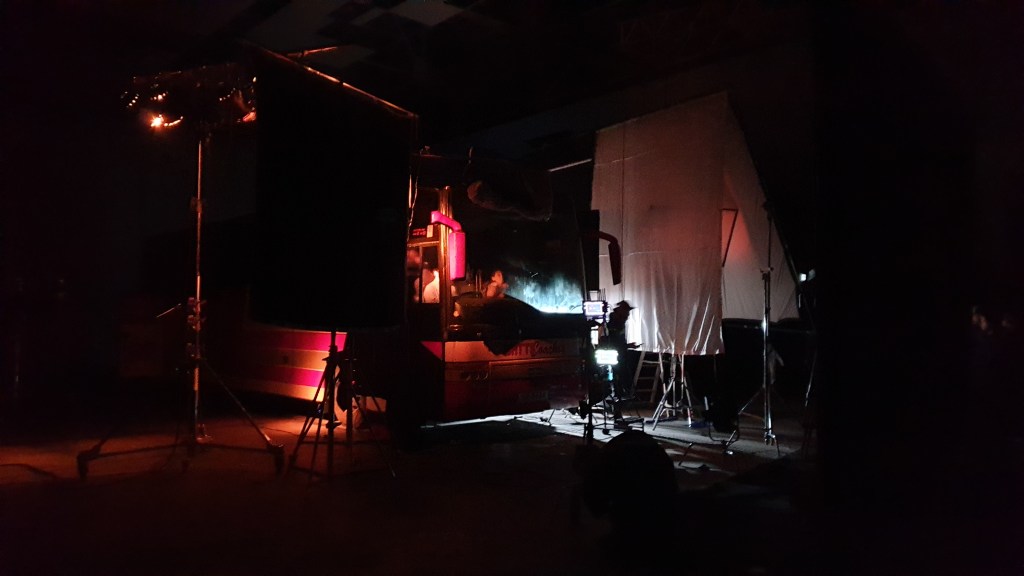
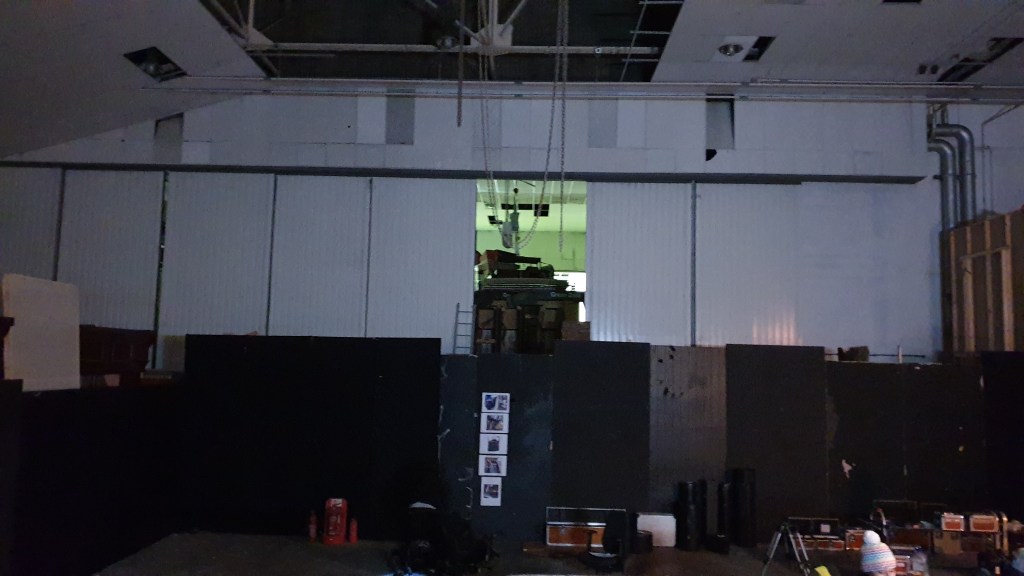
We were filming in an old aircraft hanger in the South of Wales, close to Cardiff.
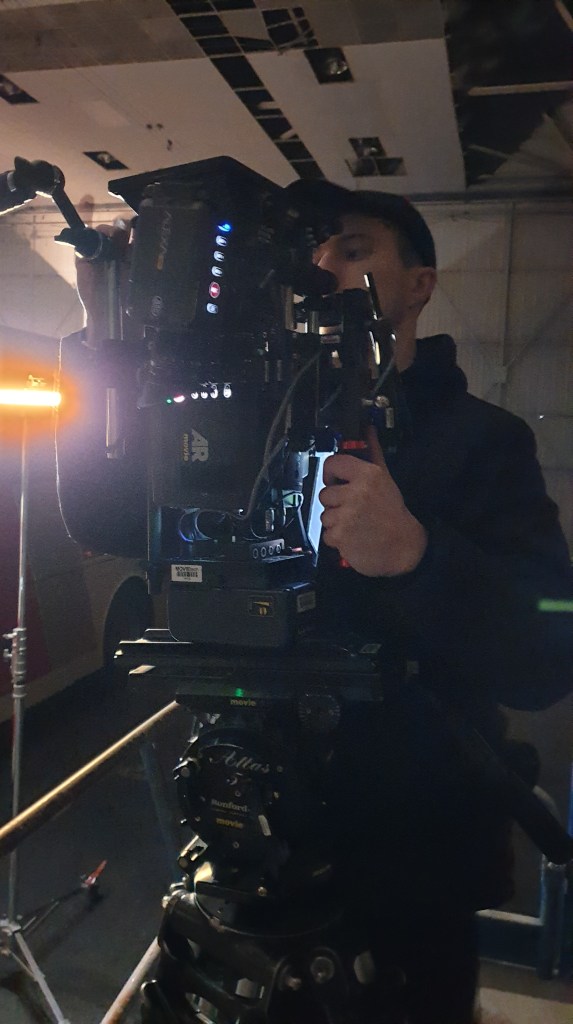
Below shows the space we had to lay out our camera equipment. We can see the Arri Alexa mini fully set up with EVF, Focus monitor and and wireless remote gears for the focus puller to be able to pull focus, matt box with either a quarter or a half BMP Filter – Black Pro Mist -, Teredek transmitter – a wireless system to send out the footage to relevant monitors (Directors, script supervisors and focus monitors) and it was my responsibility to plug the camera to the block battery whenever the camera wasn’t in use. We attached an extension the the handle on top of the camera so that it was easier to pick up the camera.
Matt Lewis, focus puller, is holding the camera upright in order for me to tighten the plate.
Below is a picture of me slating the clapperboard for the relevant scene. As you can see, my numbers fill the boxes designated for each piece of information, (title of the film, roll number, date, slate, take, names of director and DOP and any other information specific to the shot like various filters. This is so it is very clear for the editor when it comes to editing. Another important element to slating a clapper board correctly, is knowing how close to put the board to the lens in order to have the board in full frame. This makes it easy for the editors to identify all the information needed without any difficultly. A general rule is a 25mm lens, you should present your board 2.5 feet away and the same the same rule for each lens. Obviously, this can vary dependent on the size of the sensor of the camera being used, or the size of the clapperboard.
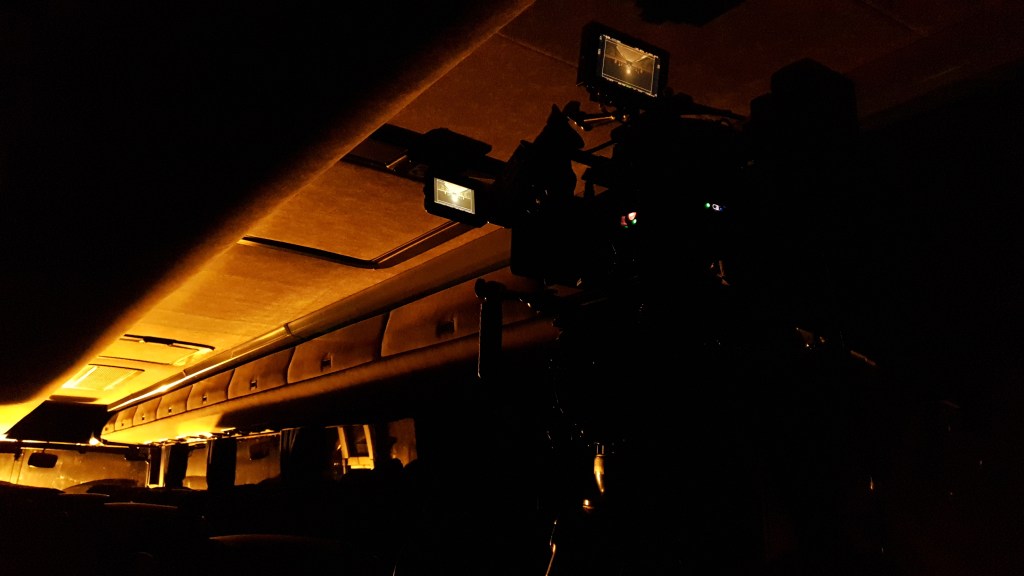
A picture showing one of the set ups inside the bus we were filming in.
Below shows the first day of my camera notes:
As you can see all the relevant camera information is present on my notes, Title, date, camera type, scene, roll, slate, take, lens, filter present, T stop, FPS – Frames Per Second -, shutter angle, shooting format, colour temperature.
Mathew Lewis IMDb:
https://www.imdb.com/name/nm8009921/?ref_=ttfc_fc_cr15
Callsheet day 1:
Callsheet day 2:
Callsheet day 3:
Mathew Lewis testimonial:
Below shows Mathew’s testimonial in written form:
MOTION SICKNESS Reference:
“At the end of last year he came onboard a job I was focus pulling on for DP Nic Booth. We were shooting in south wales and had a loader drop out; luckily Adam was in Wales at the time and was happy to come down to help. The shoot was a short film, funded by the Welsh film board. It shot exclusively in a cold dark warehouse near Cardiff and we shot on an Alexa Mini LF with a set of Canon rehoused K35’s, a Zeiss 200mm Macro and big box of filters including Tiffen Soft and Black Pro Mist filters. Adam was reloading the 1TB CODEX drives without issue and was fast and efficient at setting up video village, charging batteries and boarding. Above all he gelled with the crew well and had a positive influence to the mood of the set. Nic was really happy we had him on the job and was grateful he could make it.” – Mathew Lewis (2020)
 Industry Practice Portfolio